ContentTrace Blog
Articles on AI content detection, what makes writing feel human, and how to understand the signals that separate authentic prose from generated text.
How ContentTrace Is Calibrated: Testing Against Human and AI Writing
ContentTrace's internal Oct 3, 2026 test: 162 samples, leave-one-out, 89% accuracy, AUC up to 94.8%, and the limits that still matter.
Read article →
Editor, Not Author: How the Content Optimizer Avoids Inventing Facts
The ContentTrace Content Optimizer rewrites for clarity, SEO or AI answers while keeping every fact, name, number and quote. Here is how the fact guard works.
Read article →
Inside the 32 Signals: How ContentTrace Reads a Draft
How ContentTrace scores a draft: Claude as an editor with a fixed rubric at temperature 0, 8 sections, content types and calibration. The full method.
Read article →
Writing for AI Overviews: How Passages Get Quoted
Google says AI Overviews need no special markup or schema, only an indexed, snippet-eligible page. What gets a passage quoted is the writing: answer first, named entities, self-contained.
Read article →
How to Add Real Expertise to an AI Draft (Without Inventing Any)
A model can give an AI draft structure but not first-hand experience. Five honest ways to add real expertise, from expert interviews to your own data, plus a provenance check that keeps every claim true.
Read article →
Information Gain: The SEO Edge an AI Draft Cannot Copy
A raw AI draft remixes the pages that already rank, so it adds almost nothing new. Original data, first-hand experience and a defended opinion are the information gain AI-assisted writers have to add on purpose.
Read article →
Brand Voice Guides That AI Can Actually Follow
Most voice guides list adjectives a model cannot act on. How to turn a vague brand voice document into tone dials, checkable rules and paired examples a model follows.
Read article →
The Generic Middle: Why AI Drafts Sag After the Intro
AI drafts usually open well and go flat by section two. Why the middle sags, how readers scan past it, and how to rebuild it so the page earns the scroll.
Read article →
Prompting for a Better First Draft: What to Give the Model Before It Writes
AI writing prompts for blog posts work when they carry five inputs: the reader, a position, real material, sources and positive constraints.
Read article →
Google Is Fine With AI-Assisted Content. Readers Are the Harder Audience
Is AI content bad for SEO? Google's own guidance says no, if it helps people. Readers are stricter: they trust suspected AI writing far less.
Read article →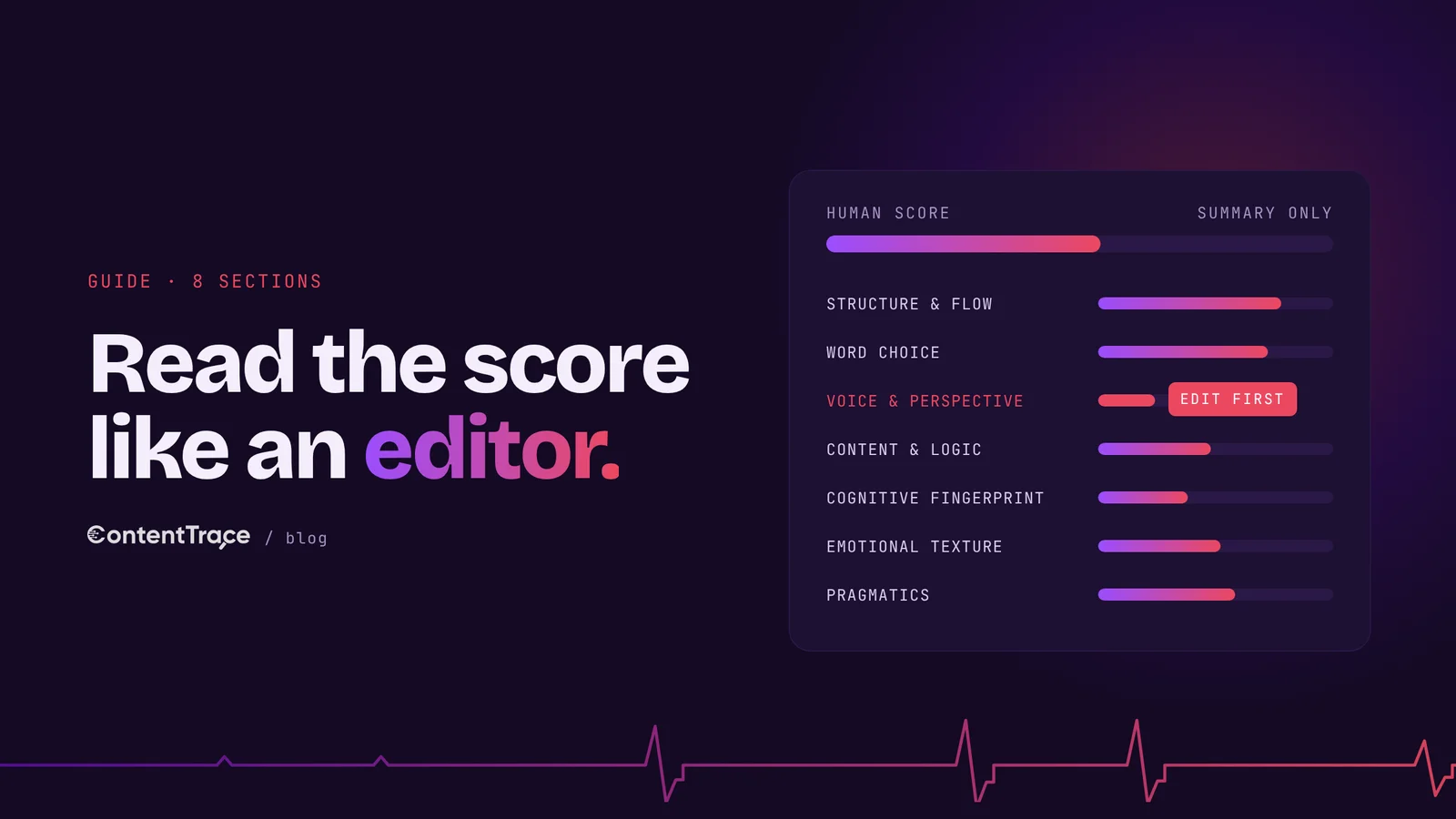
How to Read a Detection Report: Treat the Score as an Editing Map
A single score says almost nothing useful. Read the section breakdown instead, and a writing report becomes a precise map of what to edit next.
Read article →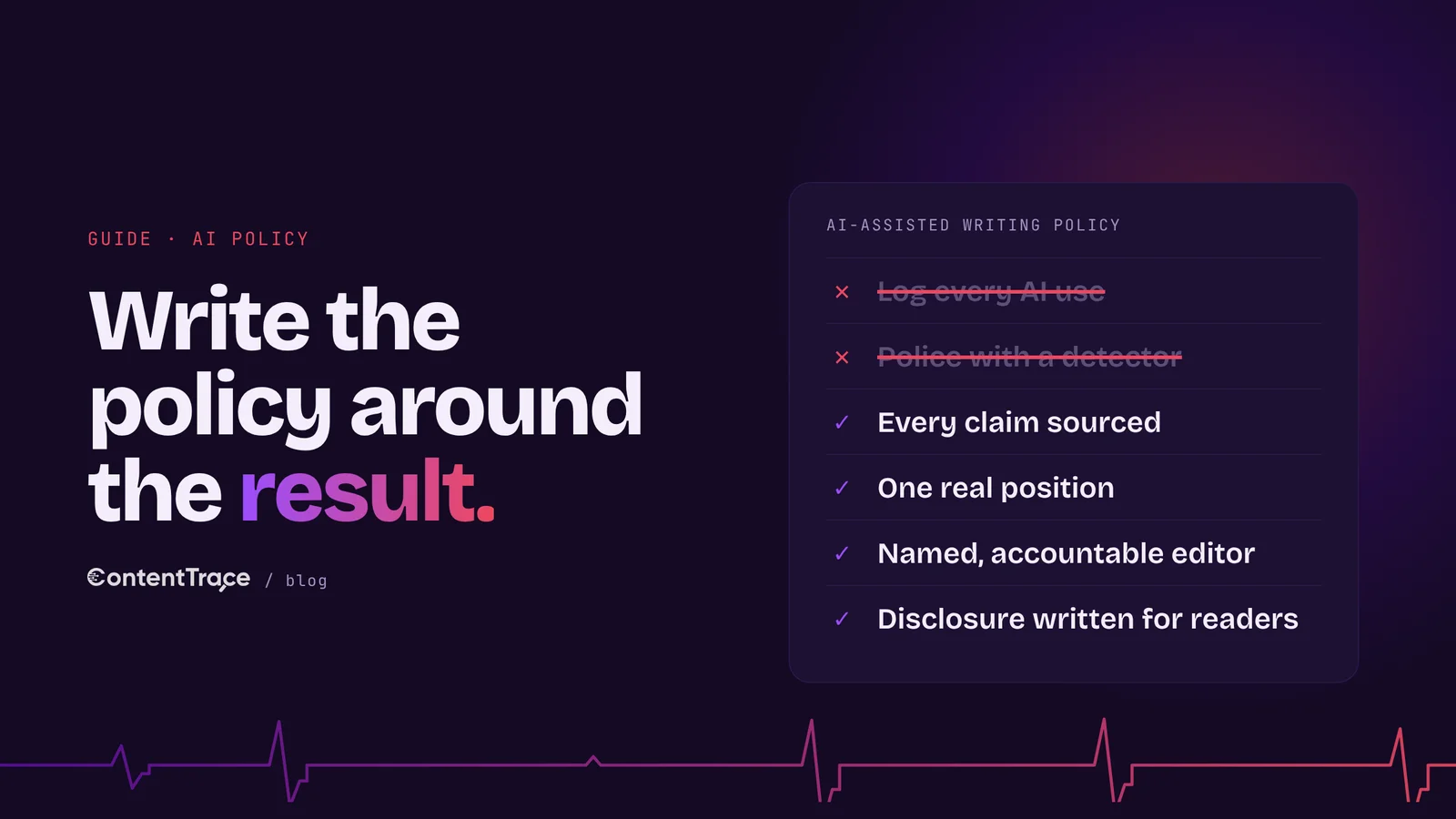
AI Writing Policies at Work: How Strong Teams Govern AI-Assisted Content
Banning AI fails and disclosure logs turn into theater. The AI content policies that work set a quality bar, a real review step and honest disclosure.
Read article →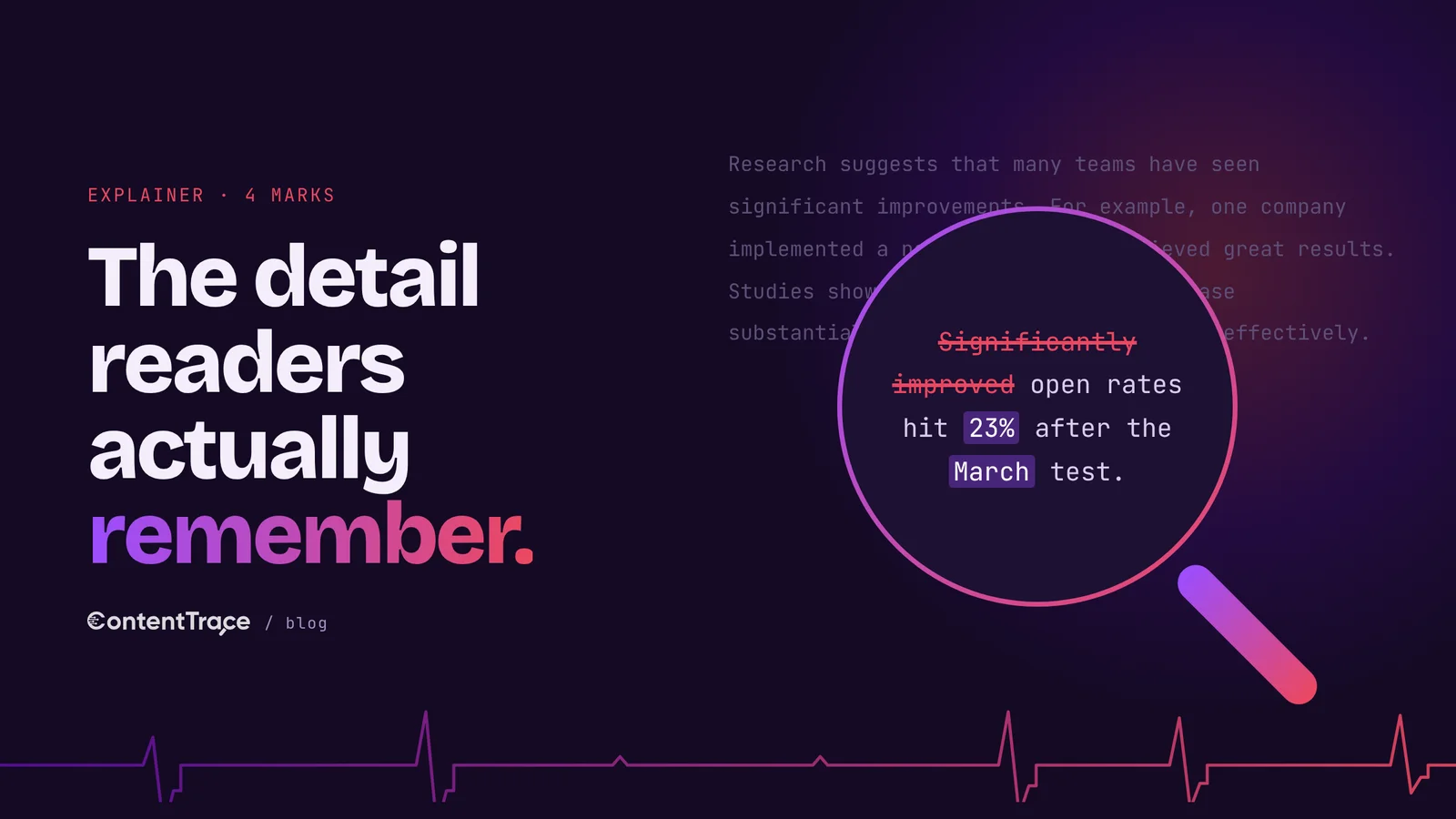
The Specificity Test: The Detail That Makes Writing Memorable
AI drafts are accurate and generic. The fastest way to improve one is the specificity test: find where specific, inconvenient detail is missing and add it.
Read article →
Does Google Penalize AI Content? What Search Actually Rewards
Google rewards helpful, people-first pages however they are made. What that means for AI-assisted writers, and how to meet the bar in search.
Read article →
How to Humanize AI Content: A Practical Guide
AI drafts are a useful starting point, but they need real editing before they're worth publishing. A six-pass framework for making AI content read like a person wrote it.
Read article →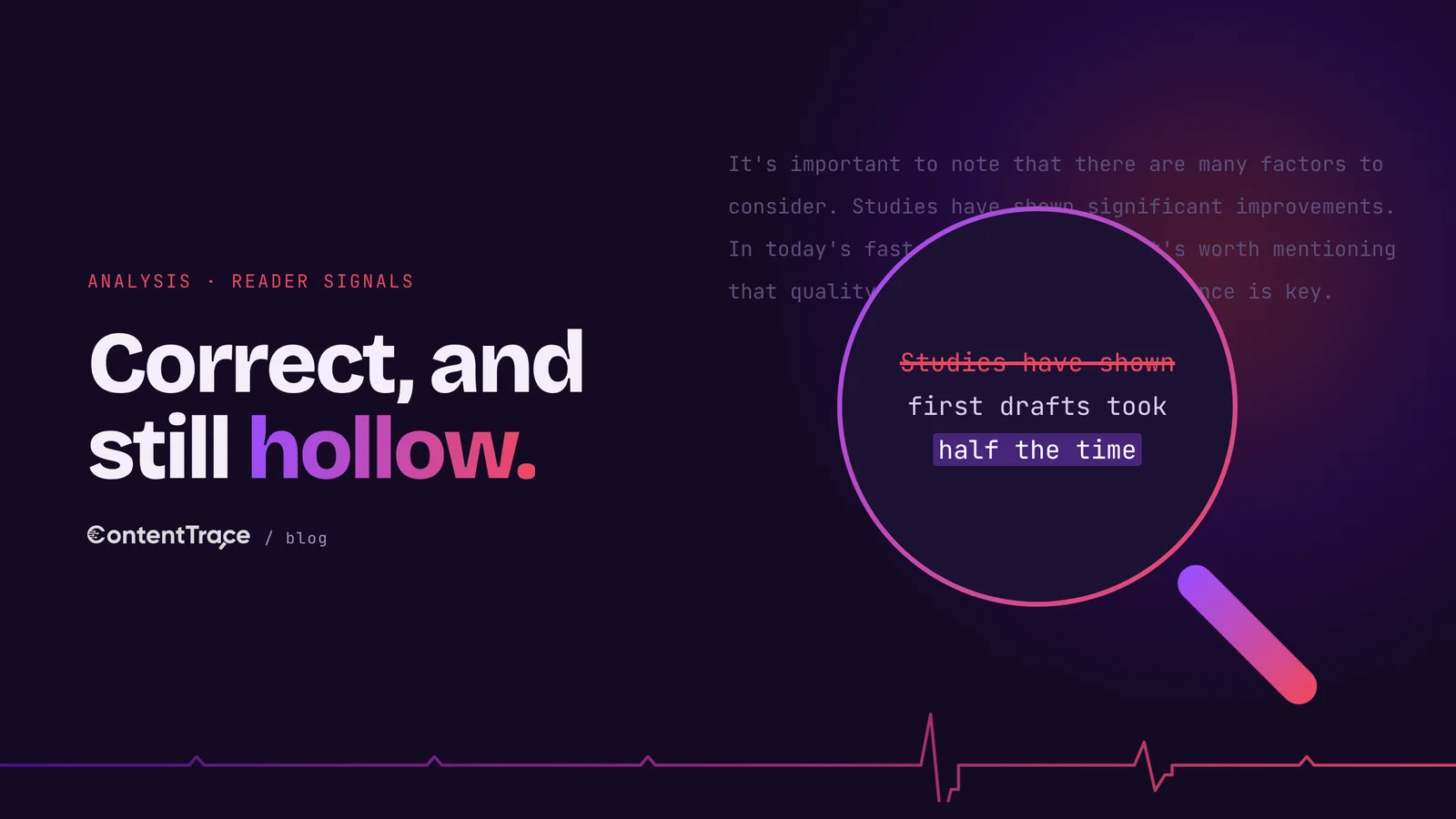
Why AI Writing Sounds Different (Even When It's Technically Correct)
AI drafts are grammatically clean and factually reasonable, yet readers feel something is off. The cause is missing evidence of a mind at work, and it can be fixed.
Read article →
How AI Text Detection Actually Works
Perplexity, trained classifiers and rubric-based reading: how each AI text detection approach works, where it breaks, and why burstiness got demoted.
Read article →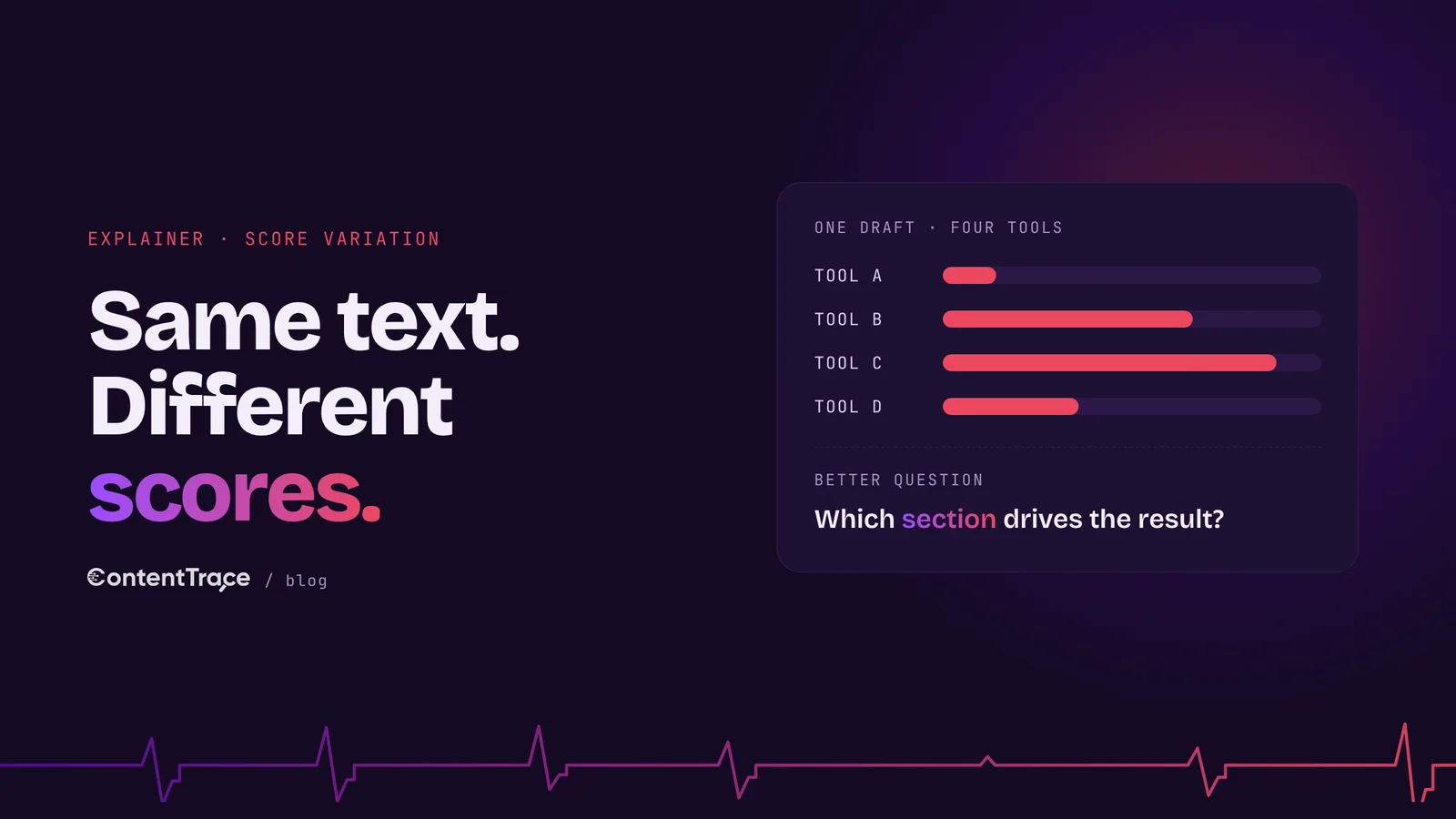
Why Your AI Detector Score Keeps Changing (And What to Do About It)
Same text, different tools, different scores. Why AI detector results vary across tools and runs, which variation matters, and how to read scores well.
Read article →
The 8 Signals That Give AI Writing Away (and What Readers Finish)
Eight behavioral signals separate raw AI content from writing people read to the end. What each one looks like, and how to add it to an AI-assisted draft.
Read article →
AI Detection in Education: What Schools Are Getting Wrong
Schools treat AI detector scores like verdicts. A score is never the only evidence about a student. What fair, workable practice looks like for teachers.
Read article →
Can AI Detectors Be Fooled? What the Research Actually Shows
Yes, paraphrasers can fool AI detectors, and the research proves it. Why beating the score is the wrong goal for AI content, and what to aim for instead.
Read article →